Why a 20ft prefab container house keeps showing up in retail projects
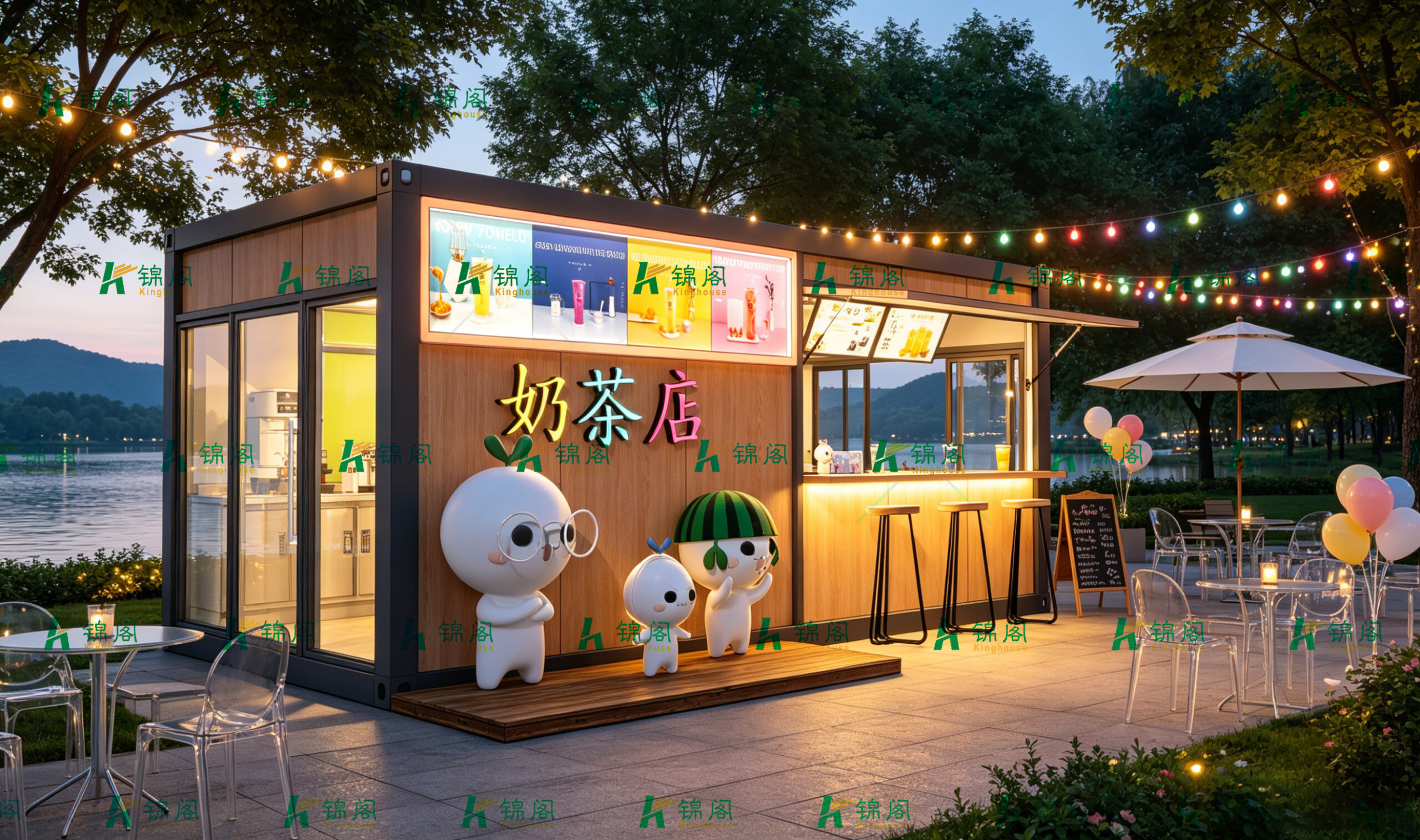
A 20ft prefab container house is no longer just a shorthand for a site office or a weekend cabin. In retail work, especially beverage and takeaway concepts, it has become a practical way to launch a small branded shop fast without committing to a full masonry build. The milk tea kiosk described in the product data is a good example: compact, visually presentable, and built around a front service counter, side access, glazing, and signage space. For buyers, the real question is not whether the format looks attractive. It is whether the unit can support the workflow, customer traffic, branding, and outdoor conditions that a small food-and-drink business actually faces.
That matters because the wrong layout can turn a low-cost storefront into a bottleneck. If the queue blocks the service window, if the counter is too shallow for drink prep, or if the shell does not suit the site climate, the shop becomes difficult to operate. A 20ft container home for sale may look like a simple product listing, but in commercial use it is really a decision about speed, footprint, customer experience, and long-term flexibility.
What this compact format is good at
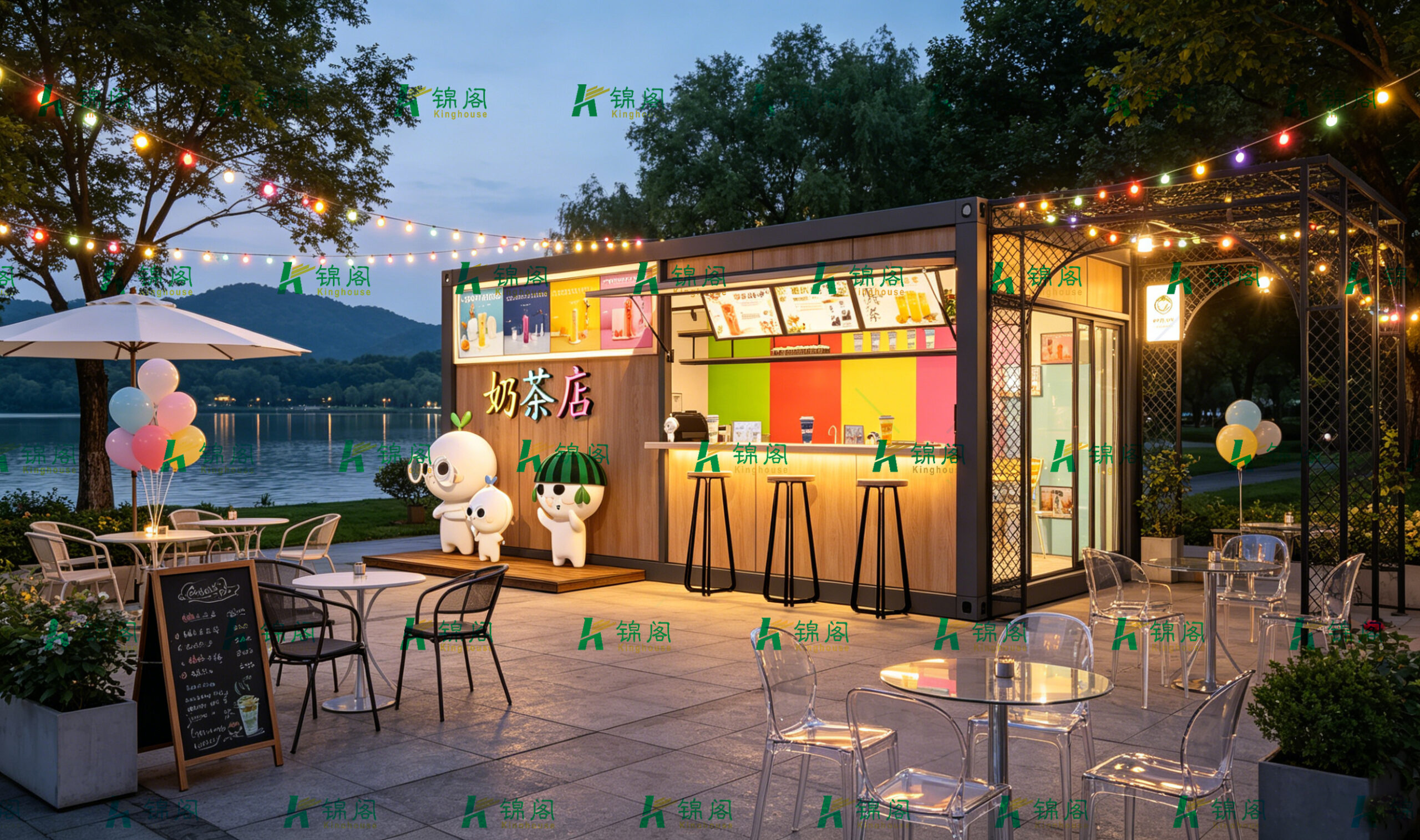
The visible unit combines a rectangular single-story shell with a service opening, a side door, illuminated signage, and a small deck at the entrance. The exterior appears to use dark metal framing with wood-look wall panels, while the interior front zone uses bright colored panels and warm lighting. That mix is not accidental. For beverage retail, the structure has to do two jobs at once: operate as a workroom and sell visually from the street.
That is why many buyers compare a 20ft shipping container house-style unit with a more conventional kiosk. The container-inspired format often wins when the site is tight, the opening date is urgent, or the concept needs a strong, repeatable look. It is also easier to imagine in settings like park cafés, lakeside concessions, campus beverage stalls, shopping district kiosks, and event vending points. In those places, a compact self-contained unit can be more valuable than extra square footage.
Quick takeaways for sourcing teams
If you are evaluating a 20ft prefab container house for food or beverage retail, the most important buying criteria usually come down to four things: customer flow, service visibility, interior fit-out, and site adaptability. A kiosk can look finished from the outside and still fail on the inside if the prep area is cramped or the service path is awkward. In practice, buyers should ask how staff move between the menu board, counter, storage, and side entry door, because that workflow affects service speed every day.
The product shown here also highlights a separate issue: the surrounding canopy, furniture, and outdoor seating are part of the scene, but not necessarily part of the delivered unit. That is an easy place for confusion, so it is worth clarifying early. Some packages include only the kiosk shell and interior fit-out; others may support full branding and exterior accessory work. The distinction changes budget and delivery scope.
Layout decisions matter more than most first-time buyers expect
A 20ft container house layout for beverage retail is usually constrained by the footprint, but constrained does not mean simple. The visible unit has a front display and service area, a side access point, and glazed sections that let customers see inside. That arrangement works because it separates customer-facing sales from internal movement without making the kiosk feel closed off.
For a milk tea or coffee concept, the service window should not be treated as decoration. It needs enough width for order handoff, topping placement, and payment handling. The front signage zone should be clear enough for branding and menu boards, while the side door should support staff entry, replenishment, or waste removal. In a small unit, every opening should justify its place.
Common layout mistakes
One common mistake is overfilling the interior with decorative panels and forgetting storage. Another is placing the main counter where the queue forms across the access path. A third is ignoring evening operation. This unit shows integrated lighting, which is useful because many beverage kiosks make a large part of their revenue after sunset. If the lighting is weak, customers see the unit as temporary even when the shell is well built.
Materials and finishes: what buyers can reasonably expect
From the visible product details, the shell seems to combine wood-look cladding, dark framing, glass openings, and a smooth flat roof. That is a common direction in modular retail because it softens the industrial look of a steel box. The result feels more like a storefront than a site hut. For a brand selling drinks, that distinction matters. People do not queue as willingly at a place that looks unfinished.
Still, it is important to stay grounded. Exact panel thickness, insulation grade, weatherproof rating, and structural specification are not supplied here, so they should not be assumed. Buyers comparing one 20ft prefab container house against another should ask for the full technical package, especially if the shop will operate in hot, rainy, coastal, or windy areas. A pretty façade is useful; a properly detailed envelope is what keeps the business running.
What modular manufacturers typically add to a retail kiosk
Guangzhou Kinghouse Modular House Technology Co., Ltd. has been working in prefabricated houses and modular buildings since 2003, with experience that spans export markets, customization, and one-stop service from design to after-sales support. That background is relevant because retail kiosks are rarely sold as bare shells. They usually require coordination between structure, interior fit-out, signage, delivery, and site setup.
For a unit like the milk tea kiosk shown, a buyer might expect customized façade treatment, internal wall finish, lighting, counter work, and opening coordination for service and access. The company also notes logistics support through ocean freight, land transport, and air freight for urgent needs, which matters when the project is time-sensitive. For commercial buyers, delivery planning can be just as important as the structure itself.
How to compare a 20ft container home for sale with a custom kiosk build
If you are sourcing this kind of unit, think in terms of business risk rather than only purchase price. A standard 20ft container home for sale may be faster to deploy, but a custom kiosk can be better aligned to the brand and service process. The right choice depends on whether the site needs a plug-and-play retail shell or a more tailored customer experience.
Use the following practical questions:
Does the unit support the menu you plan to sell, or just a generic counter service model?
Can the staff operate efficiently during peak queues, or will the layout slow them down?
Is the customer view of the kiosk strong enough to support impulse purchases?
Will the finish hold up outdoors, especially where sun, rain, or humidity are a factor?
How much customization is included, and what is left for the buyer to source locally?
These questions sound basic, but they are where projects succeed or fail. A small storefront gives you fewer ways to recover from a poor decision.
Why branding is not a minor detail in a compact kiosk
In a full-size restaurant, branding can be spread across the façade, interior, and signage system. In a 20ft prefab container house, branding has to work harder because the building is small. The visible milk tea stand uses illuminated signage, menu boards, mascot graphics, and a vivid interior palette. That is smart. A compact unit can look larger, busier, and more established if the visual language is handled well.
That said, branding should not overwhelm operations. Some operators spend too much time on exterior decoration and too little on prep flow, storage, or easy cleaning surfaces. A buyer-facing warning is worth stating here: pretty retail units can hide awkward workspaces. Always verify the inside as carefully as the front elevation.
Buyer guidance for outdoor food and beverage use
For park cafés, lakeside concessions, campus drinks stalls, and temporary event vending, the appeal of a modular kiosk is obvious. It can be placed where a permanent build would be slow, costly, or visually intrusive. It also gives operators a chance to test a concept before committing to a larger site. That is one reason the 20ft shipping container house style keeps appearing in commercial projects.
Before ordering, buyers should confirm the intended site conditions, utility connection plan, and local permitting requirements. The product data does not specify electrical, plumbing, HVAC, or compliance details, so these items must be clarified with the supplier. If the kiosk is intended for hot drink service, chilled drinks, or wet preparation, utility planning becomes especially important. In small units, a missing service line can delay opening more than a missing chair or signboard ever will.
FAQ: questions buyers usually ask
Is a 20ft prefab container house only for housing?
No. In practice, the format is widely adapted for retail, ticketing, food service, and other compact commercial uses. The milk tea kiosk example shows how the shell can be configured as a branded beverage point-of-sale unit.
Can it be used as a permanent shop?
It can be used in semi-permanent or longer-term locations if the structure, utilities, and local approvals support that use. The key is not the label “container” but whether the build is suitable for the site and business model.
What should be checked before placing an order?
Ask for layout drawings, included components, utility requirements, exterior finish details, and delivery scope. Also clarify what is not included, because outdoor furniture, canopies, and decorative pieces may be shown in images without being part of the base unit.
A practical next step for sourcing teams
If your project is a beverage shop, event kiosk, or small branded concession, start with the workflow, not the façade. A good 20ft prefab container house should make service quicker, the brand clearer, and the site easier to manage. From there, compare structure, fit-out, and delivery scope with the same discipline you would apply to any commercial equipment purchase.
For buyers who want a modular retail solution rather than a generic box, Guangzhou Kinghouse Modular House Technology Co., Ltd. offers a relevant starting point with experience in prefabricated and modular buildings, customization, and international logistics. The sensible next move is to request a detailed layout, scope list, and technical clarification for your specific site. That way the kiosk you order is the one you can actually operate, not just the one that looked good in the rendering.
Leave a Reply