Why a capsule house is suddenly on so many shortlists
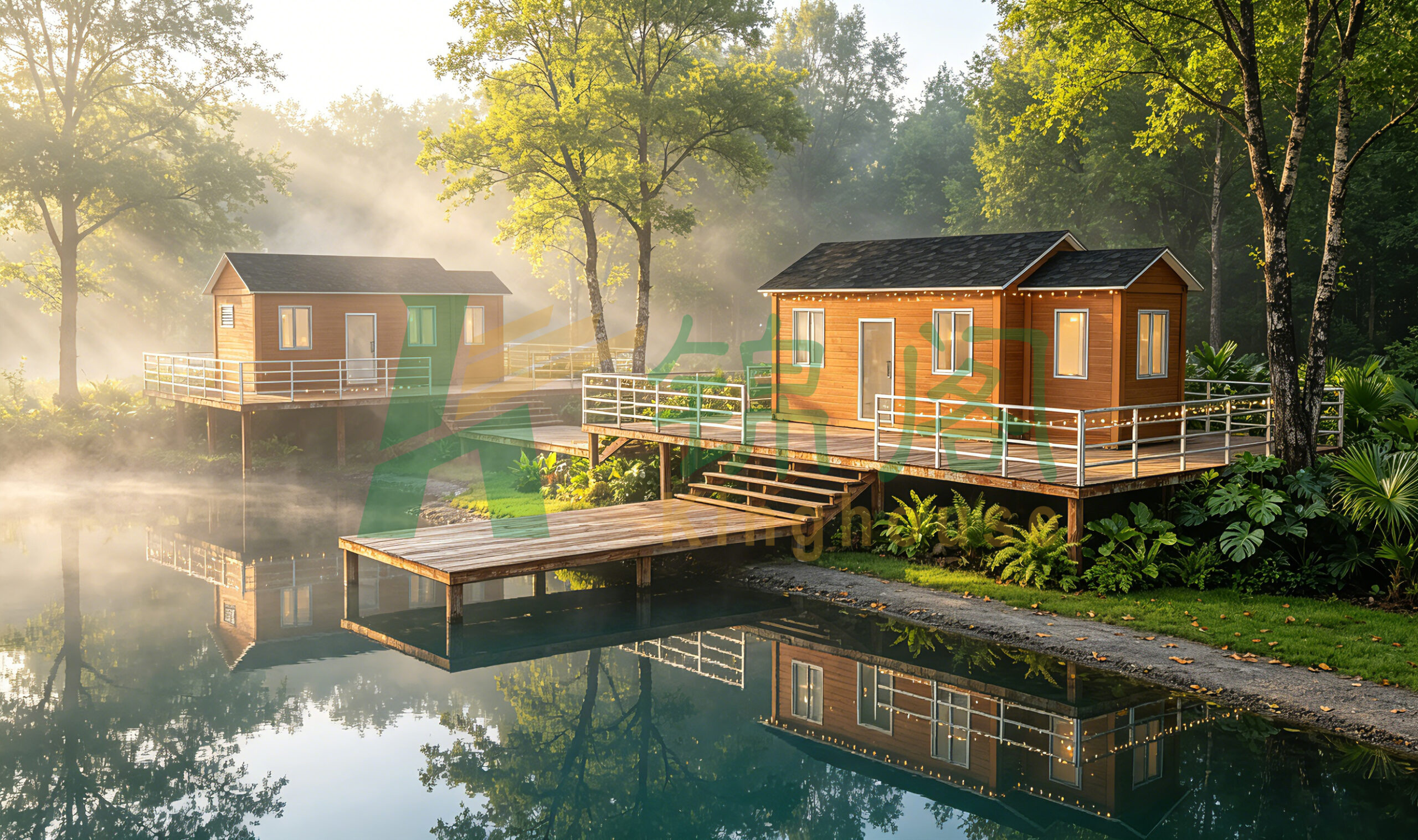
A capsule house is no longer just a curiosity in the tiny-home conversation. For resort operators, glamping developers, and landowners looking at waterfront or uneven sites, it has become a practical answer to a very specific problem: how do you add usable accommodation without pouring a large slab, building a heavy structure, or waiting through a long site build? The appeal is easy to see in the product type shown here. Compact cabin bodies, elevated framing, timber-look finishes, and deck access make the unit feel more like a guest retreat than a temporary shed.
That matters because the buyer is rarely shopping for a shape alone. They are deciding whether a prefab capsule house can create rentable space quickly, fit a difficult site, and still look attractive enough to support nightly rates or guest satisfaction. In that sense, this is less about novelty and more about operational flexibility.
What the product is solving for
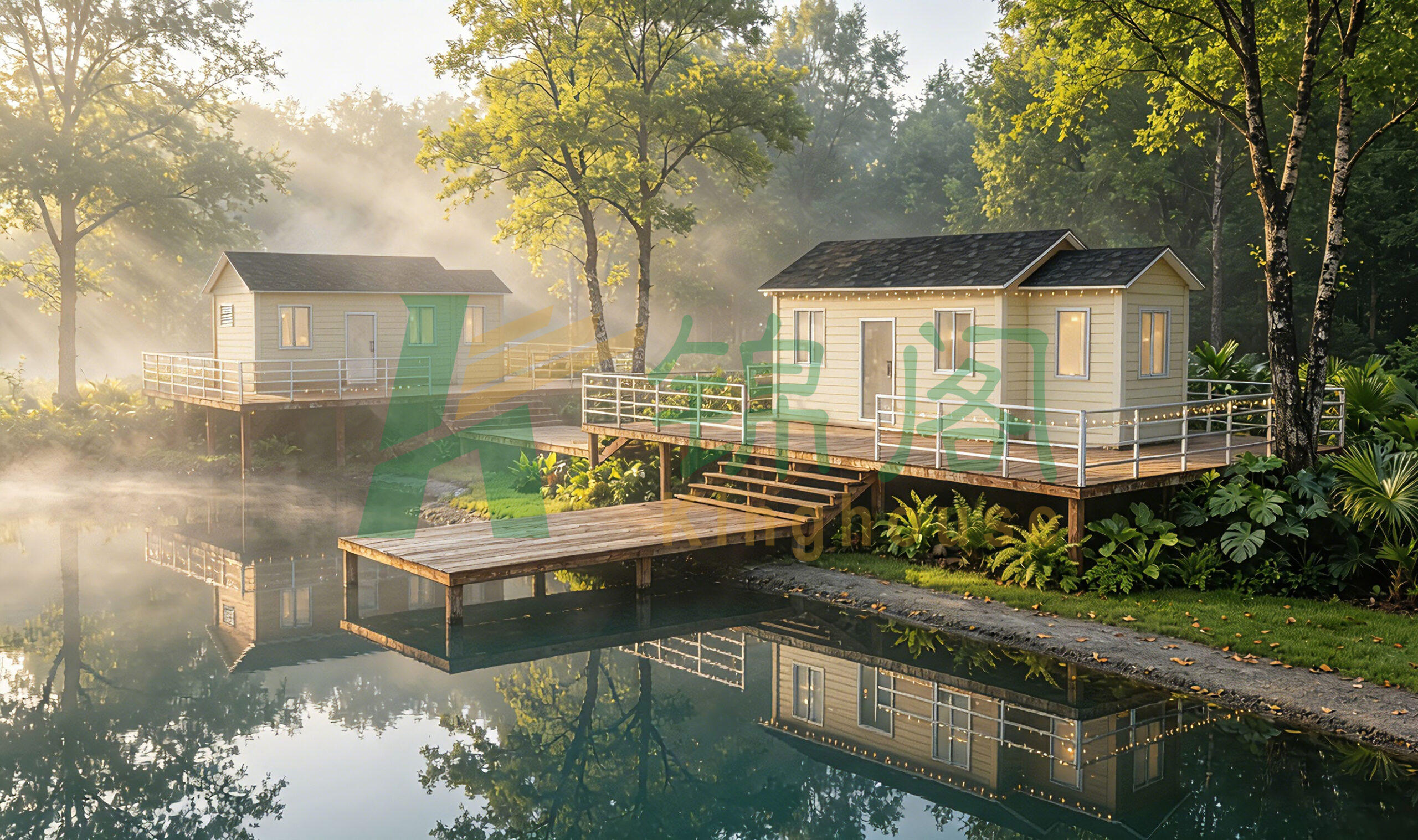
The visible units in this category sit somewhere between a tiny house and a small modular cabin. They are compact, single-story, and intentionally simple in geometry. Raised platforms, external stairs, and guardrails help them adapt to water-adjacent land, soft ground, or uneven terrain. That is a useful advantage when the site is not perfectly flat, which is often the case for lakeside retreats, park accommodation, and remote leisure plots.
For a buyer, the practical question is not whether the unit looks good in a render. It is whether the build can be deployed with manageable site work, then maintained without turning into a constant repair job. A modular capsule house can be attractive precisely because it keeps the footprint small, limits earthworks, and can be repeated across a site with some consistency.
Quick takeaways for buyers
If you are comparing options, a few points stand out quickly.
The first is land efficiency. These units occupy less ground than a conventional cabin, which is useful when a resort wants more keys per acre or when a private owner wants a guest unit without overwhelming the site.
The second is visual presentation. The warm cladding, pitched roof, and decked entry path give the unit a familiar holiday-cabin feel. That is not trivial. In hospitality, first impression affects booking confidence.
The third is deployment logic. The product appears suited to factory-built or panel-built construction, though the exact method is not confirmed here. That still points to a faster build path than traditional stick construction on site.
Where these units fit best
The strongest use cases are the ones where flexibility and atmosphere matter together. Lakeside rentals, glamping plots, park accommodation, eco-retreats, guest cabins, and auxiliary units on private land all fit the profile. The product can also work as a site office or temporary lodging where a residential appearance is preferred over a purely utilitarian cabin.
Kinghouse, founded in 2003, brings a useful frame to this category. The company’s background is in prefabricated houses and modular buildings, with later expansion into international markets and continued development of foldable and expandable container house series. That history does not tell you everything about this specific cabin type, but it does suggest a manufacturer accustomed to modular production, logistics, and customization across multiple use cases.
Design features that are doing real work
Several visible elements are more than decoration. The elevated structure helps keep the cabin above damp ground, splash zones, or minor site irregularities. The deck and railings extend usable space outdoors, which is especially valuable in hospitality settings where guests want a place to sit, step outside, or enjoy the view without enlarging the interior.
Multiple windows matter too. They bring daylight into a small footprint and reduce the closed-in feeling that can hurt a tiny house experience. In a rental setting, that is one of those details guests notice even if they do not say it explicitly.
The pitched roof, meanwhile, is a practical choice in many climates because it sheds water efficiently and gives the unit a more conventional cabin profile. That said, a buyer should not assume roof appearance tells the whole story. Roof shape is not the same thing as thermal performance, and appearance alone is not a substitute for a proper specification review.
Prefab capsule house versus conventional cabin
Compared with a conventional site-built cabin, the prefab capsule house concept usually aims for more repeatability and less jobsite uncertainty. That is appealing when you are rolling out several units across a resort or campground. Repeatability helps with ordering, scheduling, maintenance planning, and guest experience. If one unit performs well, a second or third should not feel like a different product altogether.
Compared with a larger modular villa, however, this type of unit is more selective in what it can do. Space is limited. Storage is limited. Utility routing can be more constrained. If a buyer expects full-family living or long-stay comfort, the design needs to be checked carefully against real operating needs rather than aspirational marketing language.
Selection criteria that should not be skipped
Buyers tend to focus first on appearance, but that is where a poor decision begins. Start with site conditions. Is the land level, sloped, soft, wet, or exposed to water movement? The elevated framing seen in these units is helpful, but it is not a substitute for proper foundation planning.
Then look at intended use. A weekend rental can tolerate a different layout than a staff cabin or a semi-permanent guest unit. The same shell may need different interior finishes, storage planning, and service access depending on occupancy pattern.
Material choices deserve close attention as well. The visible timber-look exterior, wood or wood-composite decking, and coated guardrails suggest a cabin-style package designed to feel warm and approachable. But buyers should ask what is decorative versus structural, what is weather-facing versus interior-facing, and what maintenance cycle the finish will require in a humid or waterfront environment.
Finally, confirm the logistics plan. Kinghouse notes standardized and flat-pack packaging, along with ocean freight, land transport, and urgent air freight options for different order profiles. For a buyer, the useful question is not just how the product is made, but how it gets to the site and what assembly support is available when it arrives.
Common mistakes buyers make with small modular cabins
The most common mistake is underestimating site work. A small cabin still needs access, drainage planning, utility coordination, and a sensible installation sequence. The structure may be compact, but the project is not automatically simple.
Another mistake is assuming “tiny” means “cheap to operate” in every case. Smaller space can reduce material use, but a waterfront or remote site may increase transport, foundation, and service costs. A buyer should look at the whole project cost, not the shell alone.
There is also a tendency to over-specify interiors and under-specify the envelope. In a rental setting, a stylish interior cannot make up for condensation issues, poor ventilation, or awkward access. The buyer-facing warning here is basic but important: if the specification sheet is thin, ask for more detail before committing.
What to ask a supplier before you place an order
Ask how the unit is built, even if the answer is modular or panel-based and not fully fixed yet. Ask what is included in the standard package and what counts as an option. Ask how decks, stairs, railings, and dock-like extensions are handled. Those elements are not minor accessories; they affect usability and safety.
It is also worth asking how the supplier supports design changes. Kinghouse describes one-stop service from design to after-sales support, with customization options and installation support. For a commercial buyer, that matters because a resort layout rarely follows a factory default. Access paths, sightlines, privacy spacing, and service connections all shape the final result.
FAQ for practical buyers
Is a capsule house only for short-term stays?
Not necessarily. The visible product type is well suited to short-term rental and hospitality use, but it can also function as a guest unit, auxiliary space, or semi-permanent cabin depending on the build specification and local rules.
Can it work on waterfront land?
Yes, the elevated design shown here is clearly suited to that kind of site. Still, waterfront projects require careful attention to foundations, moisture exposure, and access planning.
Is prefab always faster?
Usually faster than a full conventional build on site, but not magically fast. Transport, foundation preparation, utility coordination, and final assembly still take time. The advantage is more predictability, not zero effort.
Who is the best buyer for this type of unit?
Resort operators, glamping developers, campground owners, eco-retreat projects, and private landowners with a guest accommodation plan are all natural fits. The product is less compelling when the need is for very large family living or highly customized long-term housing.
A sensible next step
If your project needs a small accommodation unit that looks welcoming, uses land efficiently, and can be deployed with less site disruption than traditional construction, a capsule house is worth a serious look. The best move is to compare actual site conditions, operating needs, and package contents before you compare price alone.
For buyers exploring prefabricated and modular options, Guangzhou Kinghouse Modular House Technology Co., Ltd. offers a useful starting point because of its long experience in modular building, customization support, and international delivery experience. The right conversation is not “Can you sell me a cabin?” but “Can you help me match a cabin system to this site, this guest profile, and this operating plan?” That is the question that usually separates a workable project from an attractive mistake.
Leave a Reply