Why a portable toilet matters when a site cannot wait
A portable toilet is rarely the first item people talk about when they plan a job site, festival, camp, or emergency response area, but it is often one of the first things workers notice when it is missing. Sanitation affects morale, compliance, housekeeping, and even how long people can stay on site without friction. For project managers and sourcing teams, the real question is not whether to buy a unit, but which kind of temporary toilet will hold up to daily use, cleaning, and transport without becoming a maintenance problem.
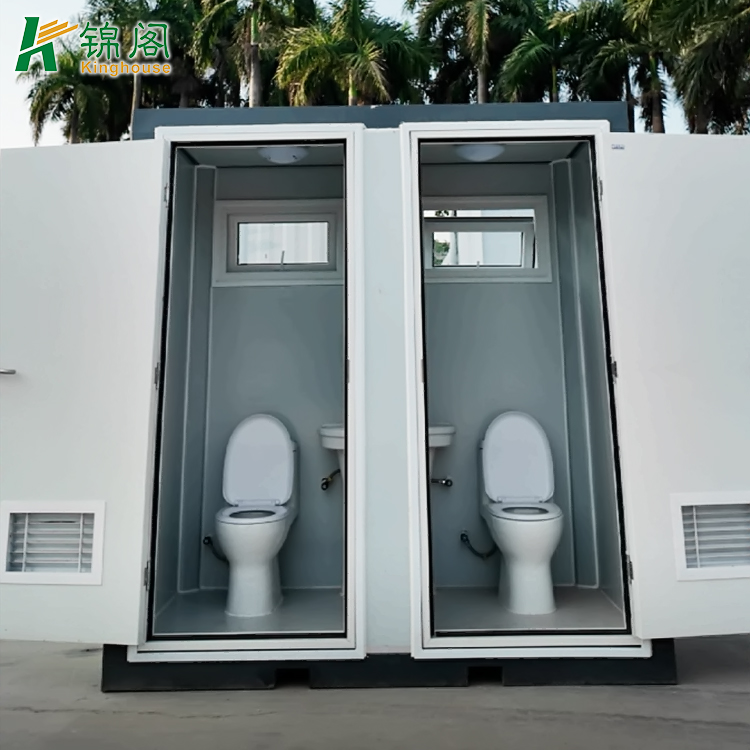
The visible product category here is a prefabricated portable restroom or mobile toilet unit with two separate stalls. That matters because a single compact cabin can solve a very practical problem: provide enclosed, lockable restroom space in places where permanent plumbing is not available or is not worth building for short-term demand. In other words, the decision is about speed and usability first, and appearance second.
The core buying decision: capacity, mobility, and site fit
Most buyers start with the wrong question, usually asking how cheap the unit is or how small it can be. A better starting point is how many people will use it, how often it must be serviced, and how easily it can be moved from one location to another. A mobile toilet that is too small for the crew creates queues and complaints. One that is too complex to place or connect can slow deployment and complicate logistics.
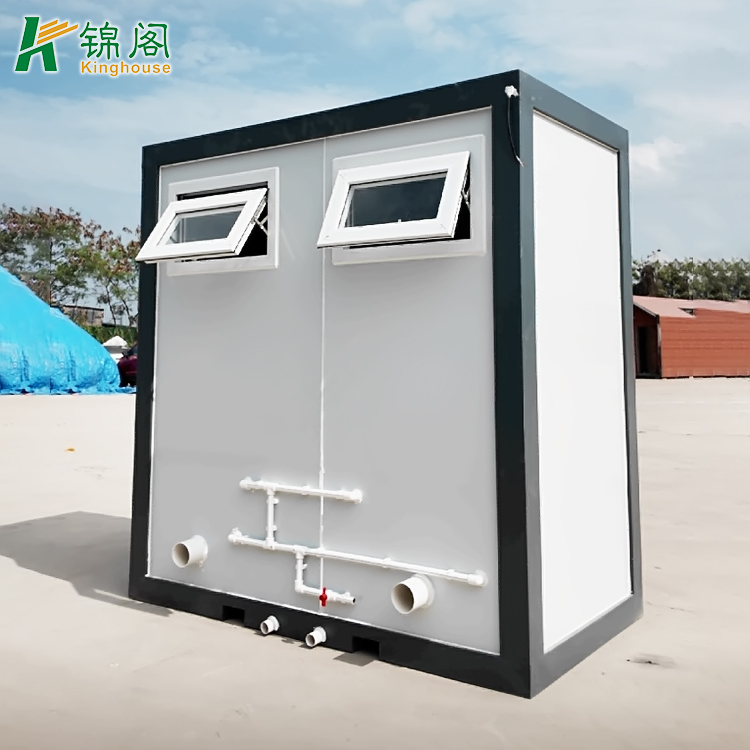
The Kinghouse-style modular cabin shown in the supplied information points to a practical middle ground: a compact box-style structure, two front-opening doors, separate compartments, and small windows for daylight and ventilation. That is useful for construction sites, outdoor events, parks, remote work areas, and emergency sanitation where the need is immediate and the footprint must stay controlled. For many buyers, a dual-stall layout is enough to improve throughput without moving into a larger restroom block.
What this type of unit is designed to solve
A temporary toilet is not just a container for fixtures. It is a controlled space for sanitation, privacy, and basic hygiene in places that do not have fixed infrastructure. The design needs to survive transport, repeated cleaning, and rough handling at the site edge. It also needs to be intuitive. Crews should understand where to enter, how to close and lock the doors, and where the service points are without a manual.
In the visible unit, the separate compartments are a useful detail. They reduce crowding and allow two users at once, which can matter far more than buyers expect during shift changes, event breaks, or peak-use windows. The enclosed stall design also helps with privacy, which is not a luxury in temporary facilities; it is one of the reasons people will actually use the unit as intended.
Materials and build style that usually make sense
Based on the provided product information, the exterior appears to use painted metal or coated composite panels, while the interior surfaces look smooth and washable, possibly PVC, FRP, or coated paneling. That combination is common in prefab sanitation modules because it balances easy cleaning with a rigid outer shell. The exact substrate is not visible, so it would be unwise to treat the material guess as a specification. Still, the visible finish suggests a unit built for repeated use rather than a one-off display structure.
That distinction matters. A portable restroom for field use should favor surfaces that tolerate moisture, cleaning chemicals, and frequent contact. Smooth interiors are easier to wipe down, and a simple rectangular geometry usually leaves fewer hidden corners where grime collects. Buyers often overfocus on exterior appearance and underfocus on serviceability, which is a mistake that shows up after the first month of use.
The small high windows visible on the stalls are also worth noting. They may not tell the whole story about airflow, but they do indicate attention to daylight and basic ventilation. In a mobile toilet, anything that improves user comfort without adding fragile hardware is worth taking seriously. A window cannot replace proper ventilation engineering, yet it can reduce the feeling of being boxed in.
When a dual-stall layout is the right choice
Two-stall units fit sites that need modest capacity without a full restroom block. That includes small to medium construction crews, temporary site offices, outdoor service points, and event support areas. A single unit with two compartments can also simplify placement compared with multiple single cabins. Fewer pieces mean fewer transport touches, fewer installation decisions, and less confusion about where the facility should sit on site.
There is a practical caution here: if the site sees sharp peaks in use, a two-stall portable toilet may still be too limited. That is especially true at events with synchronized breaks or at worksites where large teams rotate in waves. Buyers should think in terms of traffic patterns, not just headcount. A unit that looks sufficient on paper can feel undersized in the field if everyone arrives at once.
What to check before placing an order
The most important checks are not glamorous. Confirm the intended use, expected user load, service access, and whether the unit needs external water, drainage, or power. The provided information mentions exterior plumbing pipes and fittings on a modular cabin, which suggests a design that may be intended for connected sanitation use, but the exact plumbing system, waste tank type, flushing method, and hookup requirements are not confirmed. Those points should be clarified before purchase.
Also confirm whether the unit is meant to be self-contained or tied into site utilities. That one decision affects everything downstream: transport planning, placement, maintenance intervals, and how quickly the facility becomes usable after arrival. A buyer who assumes autonomy where none exists can waste days on last-minute site rework.
For procurement teams, customization matters too. Kinghouse presents customization as part of its service model, alongside design, installation support, and maintenance. That is helpful when a project has unusual access constraints or when the site needs a specific layout, branding, or service arrangement. The point is not to ask for every feature possible, but to specify the few features that affect daily use and upkeep.
Common mistakes that make restroom units harder to live with
One common mistake is buying purely by footprint. Small is useful, but only if the space is still comfortable enough to use and service. Another is ignoring transport and placement. A modular cabin that looks straightforward in a brochure may still need careful route planning, lifting equipment, or a stable base platform once it reaches the site.
Another frequent oversight is underestimating cleaning. A portable restroom should be chosen with maintenance in mind, not just initial appearance. If surfaces are awkward to wash or service access is poor, daily operations will become harder than they need to be. The same applies to ventilation and doors. A unit that is theoretically functional but unpleasant in practice tends to lose acceptance quickly among users, and then the whole sanitation plan starts to slip.
Why modular manufacturing helps buyers
Kinghouse, based in Guangzhou, says it has worked in prefabricated houses and modular buildings since 2003, expanded into international markets in 2012, and now exports to more than 60 countries according to its company profile. Those milestones do not tell you everything about a specific unit, but they do suggest a manufacturer familiar with repeatable fabrication, export logistics, and service support across different market conditions.
That matters because a restroom module is not an isolated product. It sits inside a larger delivery chain that includes packaging, transport, site handling, installation guidance, and after-sales support. The company also describes one-stop service from design through maintenance, which is the kind of support model many engineering contractors prefer when they want fewer handoffs and clearer responsibility. For a buyer managing multiple suppliers, that can be a real advantage.
FAQ
Is a portable toilet always self-contained?
No. Some units are self-contained, while others require external connections for water, waste, or power. The supplied information for this unit does not confirm the exact setup, so the connection method should be verified before ordering.
What is the main advantage of a two-stall unit?
It improves throughput without taking the space or complexity of a larger restroom block. That makes it useful for moderate traffic and short- to medium-duration deployments.
Can a mobile toilet be customized?
Often yes, especially with modular manufacturers. Layout, exterior finish, and service interfaces are common areas for customization, but the final scope depends on project needs and the factory’s build options.
What should buyers ask first?
Ask how the unit is used, how it connects, how it is cleaned, and how it will be transported. Those four questions usually reveal whether the product matches the site or just looks suitable.
Next step for buyers
If you are comparing sanitation options for a worksite or temporary deployment, start with the real operating conditions, not the catalog photo. Measure expected traffic, check service access, and decide whether you need a single cabin, a dual-stall module, or a larger restroom layout. If you need a modular supplier with design and logistics support, Kinghouse offers a contact path through its Guangzhou base and global sales channels, which can be useful when the project timeline is tight.
The best portable toilet is the one that stays usable after the first rush, the first cleaning cycle, and the first relocation. That is the standard worth applying before any purchase order goes out.
Leave a Reply