Why a portable toilet is often the first thing a project regrets not planning early
A portable toilet sounds like a simple purchase until a site goes live and the gaps become obvious. Crews lose time walking to distant facilities, event guests queue longer than expected, and temporary camps quickly discover that sanitation is not a minor line item. For engineers, sourcing managers, and project teams, the real question is not whether to add a portable toilet, but which type will keep people moving without creating a maintenance burden.
That decision matters because a portable restroom is doing several jobs at once: handling occupancy, keeping hygiene acceptable, fitting the site layout, and surviving transport or repositioning. In practice, buyers are usually choosing between a self-contained cab, a plumbed mobile toilet, or a modular restroom cabin built for quick deployment. The wrong choice can cost more in servicing than in purchase price, and that is where the planning needs to be sharper than the sales brochure.
What the market usually means by portable toilet, portable restroom, and mobile toilet
These terms are often used interchangeably, but buyers should not assume they describe the same product. In the field, a portable toilet may mean a compact standalone unit for emergency use or event support. A portable restroom often suggests a more complete enclosure, sometimes with multiple fixtures or a more finished interior. A mobile toilet can point to a unit designed for relocation, while a temporary toilet may be deployed for a short project phase, then removed.
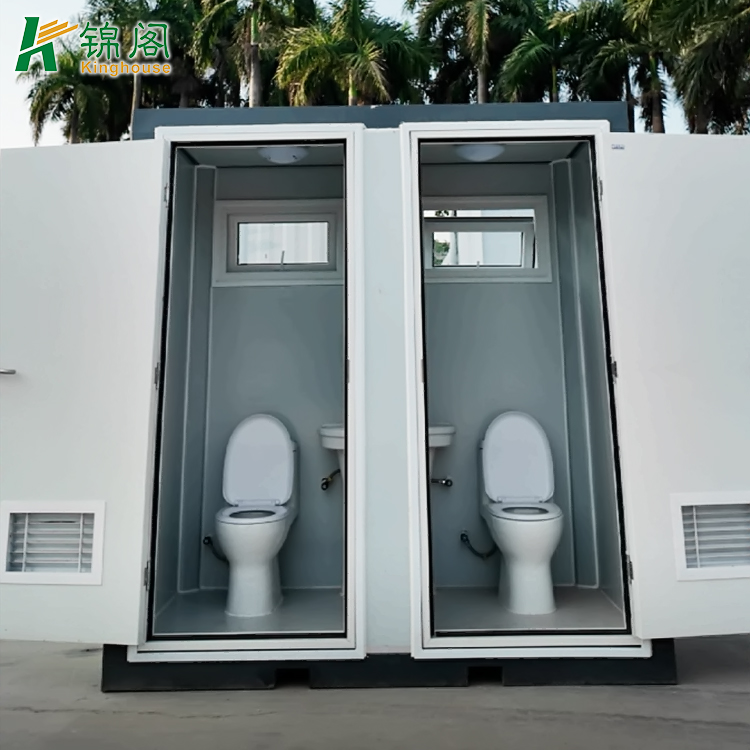
That distinction is important because the engineering behind the unit changes with the use case. A basic portable toilet might prioritize speed and minimum footprint. A modular restroom cabin, by contrast, may include side-by-side stalls, small sinks or basins, ventilation openings, and a more enclosed shell that looks closer to a factory-built room than a simple field cabinet. The visible product examples supplied here fall into that second category: prefabricated sanitation cabins designed for temporary or semi-permanent use.
What these modular restroom cabins are built to solve
The appeal is straightforward. A project needs sanitary capacity now, not after a long construction cycle. A prefabricated cabin can be placed quickly, moved if the site layout changes, and used in settings where permanent plumbing buildings are too slow or too expensive to build. That is why these units show up on construction sites, in parks, at outdoor events, along roadsides, in campgrounds, and in emergency response settings.
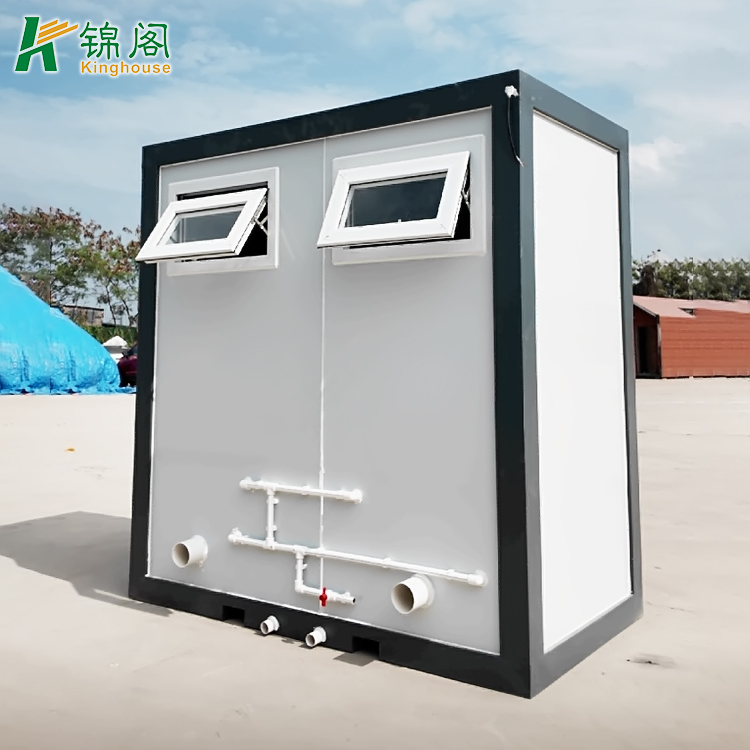
The two visible product types are especially practical. One is a two-stall public sanitation unit with two enclosed toilet compartments arranged side by side. It gives two independent bays in a single footprint, which is useful when queuing becomes a problem. The other is a compact modular restroom cabin with visible pipework and awning windows, which suggests plumbing interfaces for water supply and drainage. It is the kind of unit that can serve as a movable washroom module or temporary sanitation room when a site needs more than a single cubicle.
Quick buyer takeaway: what to check before you choose
Buyers often start with exterior size and forget the operational details. That is risky. A portable restroom only works if the site can support it.
Before ordering, confirm the following: whether the unit is self-contained or sewer-connected; whether it needs water supply and wastewater routing; whether the interior is designed for one, two, or more users; how ventilation is handled; how the cabin will be lifted, transported, and positioned; and what maintenance access exists for cleaning and servicing. Those are the questions that decide whether the unit will be useful on day one and tolerable on day 90.
What the visible construction tells us about durability and use
From the supplied product information, the cabin appears to use smooth light gray or white panel construction with a dark skid or structural base. The interior surfaces also look smooth and washable, which is exactly what buyers should want in a sanitation unit. Smooth panel finishes are easier to clean, more suitable for frequent disinfection, and less likely to trap grime in the way rough field-built interiors do.
In the two-stall unit, the front-facing double access doors, small high-set windows in each stall, and side ventilation grilles all point toward simple occupant comfort and basic airflow management. The compact modular form is useful for fast deployment, but it also suggests a practical caveat: compact does not automatically mean comfortable under heavy use. If the site expects peak traffic, a two-bay cabin may be the minimum acceptable solution rather than the ideal one.
The second unit shows a rectangular cabin with a flat roof, two small awning windows, and low-mounted plumbing fittings. That combination hints at a factory-built enclosure designed around utility connections rather than decorative finishes. For many buyers, that is a good sign. In temporary sanitation, a plain, serviceable cabin is usually preferable to one that looks polished but complicates maintenance.
How modular fabrication changes the purchasing logic
These products sit at the intersection of prefab construction and sanitation equipment. That means the buyer is not just ordering a toilet fixture; they are ordering a complete enclosure, often assembled from prebuilt wall, door, and floor modules. Guangzhou Kinghouse Modular House Technology Co., Ltd. positions itself in this broader prefabricated and modular building space, with experience dating back to 2003 and a business scope that includes container houses, prefabricated buildings, steel structures, and supporting facilities.
That background matters because a sanitation cabin from a modular-house manufacturer is usually evaluated differently from a low-cost utility box. Buyers may expect design support, installation guidance, and after-sales assistance, not just a shipped shell. Kinghouse also notes export experience across many international markets and a one-stop service model from design to support. For cross-border procurement teams, that kind of supplier profile can reduce coordination friction, though the usual sourcing discipline still applies.
Selection criteria that actually matter on site
1. Occupancy and peak flow
Do not size a portable toilet by average usage. Size it by peak occupancy, shift changes, event intermissions, or visitor surges. A unit that looks adequate on paper can become a bottleneck very quickly.
2. Service model
Some mobile toilet units are intended for routine servicing with external tanks or plumbing connections; others may be better suited to controlled sites with established utilities. If that is unclear, ask before purchase. It is a common mistake to discover connection requirements only after delivery.
3. Cleaning access
Washable wall surfaces, simple corners, and accessible fixtures make a real difference. A good temporary toilet should be easy to sanitize repeatedly, not just acceptable on installation day.
4. Ventilation and odor management
Visible windows and vents are not decorative. In a small enclosed cabin, basic airflow affects user acceptance as much as fixture quality does. If a unit will be used heavily or in warm climates, ventilation should be treated as a core requirement.
5. Transport and placement
Buyers should confirm how the unit is moved, where it can be lifted from, and whether the site can handle the base or skid format. A product that is portable in theory can still be awkward in a cramped yard or soft ground.
Common mistakes buyers make with temporary sanitation
The first mistake is underestimating usage. Temporary projects often attract more people than the original plan assumed, especially once subcontractors, visitors, or event staff are added. The second mistake is ignoring maintenance logistics. A portable restroom that cannot be cleaned efficiently becomes a liability fast.
The third mistake is treating all prefab sanitation units as interchangeable. They are not. A two-stall public sanitation cabin, a single mobile toilet, and a modular restroom cabin with plumbing interfaces solve different problems. The exterior may look similar in a product photo, but the operating model can be completely different.
One practical caution: do not assume that a visible sink or pipe fitting means a unit is fully self-contained or ready for every location. The supplied information does not confirm tank type, flushing system, insulation rating, dimensions, or mobility method. Those items need to be verified directly with the supplier.
Who benefits most from a modular portable restroom cabin
Construction firms usually want speed, durability, and easy servicing. Mining and energy projects tend to care about remote deployment and rugged use. Government buyers may need emergency sanitation that can be delivered quickly and operated with minimal setup. Commercial users, including retail chains and healthcare providers, often want a cleaner presentation and more predictable maintenance. The same unit can serve all of these sectors, but the specification priorities will not be the same.
For rental fleets, the economics are different again. Fleet managers need repeatable transport, reliable finish quality, and a design that survives frequent moves. In that context, a prefabricated modular restroom cabin with a simple rectangular form and protective base structure is usually more attractive than a custom one-off solution.
FAQ
Is a portable toilet always self-contained?
No. Some are self-contained, while others connect to water and drainage. The supplied product examples suggest both possibilities in the market, but the exact setup must be confirmed for each unit.
What is the advantage of a two-stall unit?
It increases usable capacity without doubling the footprint. That can matter a lot on crowded sites or during short-duration events.
Can these units be used for semi-permanent installations?
Often yes, depending on the site utilities, servicing plan, and local requirements. But buyers should verify suitability rather than assume a temporary toilet can simply be left in place indefinitely.
What to ask the supplier before you place an order
Ask for the exact layout, connection requirements, cleaning access details, transport method, and any available installation support. If the cabin will be part of a larger camp or site plan, request documentation that shows how the unit integrates with other modular buildings. Also ask whether customization is available for doors, windows, interior fixtures, or exterior finish. Kinghouse notes customization and installation support as part of its service approach, which is useful if the order needs to fit an unusual project layout.
For most buyers, the smartest next step is not a broad product search. It is a specification check. Define the user load, the utilities available on site, the servicing interval, and the required level of comfort. Then compare the portable toilet options against those actual constraints. That is how you avoid buying a unit that looks fine in a catalog but fails the first week in the field.
Next step
If you are evaluating a portable restroom for a construction project, event program, remote camp, or emergency deployment, start by mapping the sanitation load and utility conditions. Then ask for a modular solution that matches those realities rather than a generic cabinet. For buyers who need design support, factory-built assembly, and export-ready logistics, a modular supplier with broad prefab experience can shorten the path from request to installation.
Leave a Reply